How to improve the performance ability of CNC spindle motor?

1.Brief knowing about CNC spindle motor
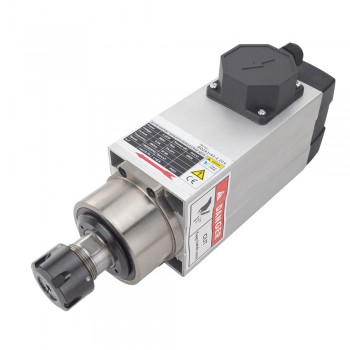
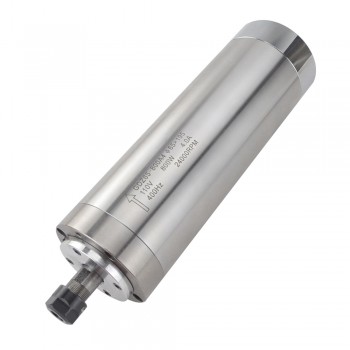
The CNC spindle motor is a high-precision, high-efficiency special motor specially designed for the spindle system of CNC machine tools. It integrates power output, speed regulation and position control, and is responsible for driving the cutting tool to complete various machining operations such as drilling, milling, turning and grinding.It is widely used in high-precision CNC machine tools, machining centers, lathes and other equipment, involving aerospace, automotive parts, electronic components and other fields that require high machining accuracy and efficiency.
2.Main components of CNC spindle motor
1.Stator: Composed of stator core and stator winding, it is the fixed part of the motor. The stator core is made of silicon steel sheet lamination to reduce iron loss; the stator winding is connected to the power supply to generate a rotating magnetic field, which provides the driving force for the rotor rotation.
2.Rotor: The rotating part of the motor, which is divided into squirrel-cage rotor and permanent magnet rotor. The rotor is connected to the CNC spindle through a transmission structure, and converts the electromagnetic force into mechanical torque to drive the spindle to rotate.
3.High-precision encoder: As a key feedback component, it is installed at the end of the motor or spindle to real-time detect the speed, position and rotation direction of the spindle, and feed back the signal to the CNC system to realize closed-loop control and ensure machining precision.
4.Cooling system: Including water-cooling jacket, air-cooling fan or heat pipe cooling structure. It is used to dissipate the heat generated by the motor during high-speed and long-time operation, avoid overheating caused by temperature rise, and ensure the stability of motor performance.
5.Bearing system: Adopt high-precision angular contact ball bearings or ceramic bearings, which have the characteristics of high rigidity, low friction and high speed resistance.
6.Drive controller: A dedicated controller matched with the spindle motor, which is responsible for receiving the control signal of the CNC system, adjusting the output voltage, current and frequency, and realizing the precise control of the motor’s speed, torque and position.

3.Main functions of CNC spindle motor
1.High-precision speed control: It can realize stepless speed regulation within a wide range, and maintain stable speed under different loads, ensuring the consistency of cutting speed and improving machining quality.
2.Stable torque output: It can provide stable torque in the whole speed range, especially in low-speed operation, it can output large torque to meet the needs of heavy cutting and deep cutting, and avoid tool damage and workpiece deformation caused by insufficient torque.
3.Fast dynamic response: It can quickly respond to the speed and torque adjustment signals of the CNC system, realize rapid start, stop and speed change, shorten the auxiliary machining time, and improve production efficiency.
4.Precise position positioning: With the cooperation of high-precision encoder and CNC system, it can realize precise positioning of the spindle, meet the requirements of indexing machining, thread machining and other operations that require high position accuracy.
5.Load adaptive adjustment: It can automatically adjust the output torque and speed according to the change of cutting load, avoid overloading of the motor, and ensure the stable operation of the machine tool and the service life of the motor.
6.Status monitoring and protection: It has functions such as overcurrent, overvoltage, overheating, and overload protection. It can real-time monitor the operating status of the motor, and automatically cut off the power or issue an alarm when an abnormality occurs, protecting the motor and machine tool from damage.
4.Performance optimization methods of CNC spindle motor
1.Rotor structure optimization: For permanent magnet synchronous spindle motors, adopt segmented permanent magnet design and optimize the magnetic pole shape to improve the magnetic field distribution, reduce torque ripple and iron loss, and enhance the stability of torque output.
2.Adopt vector control technology: Replace the traditional V/F control mode with vector control, which can decouple the speed and torque of the motor, realize precise control of torque and speed, and improve the dynamic response and control accuracy of the motor.
3.Parameter self-tuning optimization: The drive controller automatically identifies the motor parameters and optimizes the control parameters according to the actual operating conditions, ensuring that the motor is in the best operating state under different loads and speeds.
4.Upgrade water-cooling system: Replace the traditional single-loop water-cooling with a dual-loop water-cooling structure, optimize the flow rate and temperature control of the cooling water, and improve the heat dissipation efficiency, especially for high-speed and long-time operating scenarios.
5.Adopt heat pipe cooling technology: Install heat pipes in the motor shell and stator core, which have high heat transfer efficiency, can quickly transfer the heat generated by the motor to the cooling medium, and avoid local overheating of the motor.
6.Use high-performance lubricants: Replace ordinary lubricating oil with high-temperature resistant, low-friction synthetic lubricants, which can reduce the friction between the bearing and other moving parts, reduce energy loss, and prevent lubricant failure at high temperatures.
7.Regular inspection and maintenance: Regularly check the wear of the bearing, the condition of the lubricant, the temperature of the motor and the operation of the encoder, and replace the worn parts and deteriorated lubricant in time to avoid performance degradation caused by component failure.
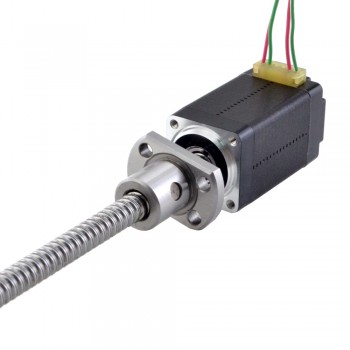
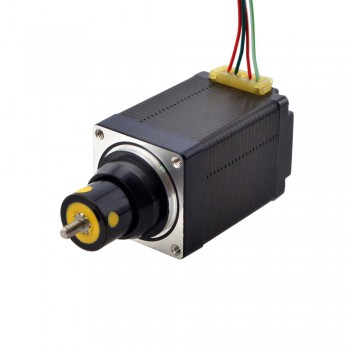
Key manufacturing requirements of linear stepper motor

1.Core definition of linear stepper motor
A linear stepper motor is a special type of stepper motor that realizes direct linear reciprocating motion through the interaction of electromagnetic fields, without relying on gearboxes, lead screws or other rotary-to-linear conversion parts. It performs fixed-step linear movement by controlling the energization sequence and pulse frequency of internal coils, and its motion state is highly consistent with the input electrical signal.Linear stepper motor widely used in high-end automation, medical devices, semiconductor processing and precision instrumentation scenarios.

2.Basic components of linear stepper motor
1.Stator assembly: The fixed end of the motor, mainly composed of coil windings, iron core laminations, mounting base and insulation layer.
2.Mover assembly: The moving end that outputs linear motion, usually equipped with permanent magnets, magnetic conductive plates and load connecting pieces.
3.Guidance and positioning components: Including precision linear guides, limit blocks and bearing parts, which are used to constrain the motion trajectory of the mover, eliminate radial runout and lateral deviation, and ensure that the mover moves strictly along the set linear path.
4.Electrical and protection components: Including lead wires, connectors, dust-proof and moisture-proof shells. The lead wires and connectors adopt low-resistance materials to ensure stable signal transmission and reduce power loss; the protection shell isolates internal components from external dust, oil stains and corrosive media, and prolongs the service life of the motor.

3.Core technical advantages of linear stepper motor
1.Ultra-high positioning accuracy and repeatability: The linear displacement is controlled by electrical pulses, with no mechanical transmission gap and no cumulative positioning error; the step displacement accuracy can reach the micron level, and the repeated positioning error is almost negligible, meeting the needs of ultra-precision processing and testing.
2.Simplified mechanical structure and high reliability: Realizes direct linear motion, eliminating intermediate transmission parts, reducing the number of moving components, lowering the failure rate caused by mechanical wear, and reducing later maintenance costs; the overall structure is compact and suitable for narrow installation spaces.
3.Flexible motion control performance: The motion speed, stroke and positioning point can be adjusted in real time by changing the pulse frequency and number; it can realize fast start-stop, micro-step crawling and fixed-point locking, and has good adaptability to variable working conditions.
4.Stable thrust output and low noise: The electromagnetic force is evenly distributed, the thrust fluctuation is small during operation, and there is no mechanical impact caused by gear meshing; the operation noise is low, and it is suitable for quiet working environments such as medical treatment and laboratories.
5.Cost-effective open-loop control: Under the condition of no feedback device, it can realize accurate positioning control, avoiding the high cost of encoder and closed-loop driver; it is easy to match with PLC and motion controller, and the system integration is simple.

4.Key manufacturing requirements of linear stepper motor
1.Raw material selection and inspection requirements: Stator iron cores must use high-precision non-oriented silicon steel sheets with low magnetic loss and high permeability to avoid magnetic leakage; permanent magnets select high-coercivity rare earth magnets to ensure stable magnetic field performance; coil enamelled wires adopt high-temperature resistant and high-insulation grade materials to prevent short circuits and aging.
2.Precision machining and dimensional tolerance requirements: The flatness, parallelism and perpendicularity of stator and mover mounting surfaces are controlled within 0.005mm/m; the matching clearance between the guide rail and the mover is strictly limited to avoid excessive clearance causing motion deviation; the coil winding turns and arrangement are uniform, and the winding tightness is consistent to ensure balanced electromagnetic force.
3.Assembly process and alignment requirements: Adopt special tooling fixtures for assembly to ensure the coaxiality and parallelism between the stator and the mover; the air gap between the stator and the mover is evenly adjusted, and the deviation is controlled within 0.01mm to prevent unilateral magnetic pull causing jamming; the fastening torque of each connecting screw is consistent to avoid structural deformation.
4.Electrical performance testing and calibration requirements: After assembly, conduct comprehensive electrical performance testing, including coil resistance, insulation resistance, no-load current and locked-rotor thrust testing; calibrate the step displacement accuracy, eliminate the deviation of individual steps, and ensure that the full-stroke positioning error is within the allowable range.
5.Protection treatment and quality certification requirements: Carry out surface anti-corrosion treatment on metal components according to the application environment, such as electroplating, spraying or passivation; carry out sealing treatment on the motor interior to improve the protection grade; each finished motor must be marked with parameters, and attach a factory test report.
6.Consistency and batch control requirements: Establish a standardized production process to ensure the consistency of performance parameters of motors in the same batch; set up quality inspection points in key processes such as winding, machining and assembly, and record process data in real time; implement full inspection for key precision indicators, and sampling inspection for conventional indicators to ensure that the factory pass rate reaches 100%.

Manufacturing requirements of harmonic reducer gearbox

1.Basic definition of harmonic reducer gearbox
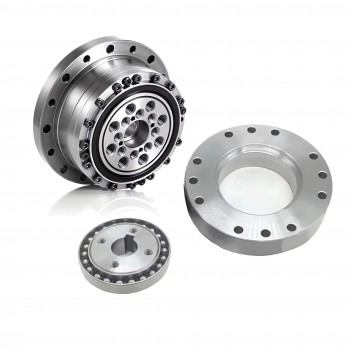
The harmonic reducer gearbox is a deceleration transmission device that drives the wave generator through the input end to make the flexspline produce elastic deformation and form a small tooth difference movement with the circular spline. It is essentially a mechanical speed change device that relies on the controllable elastic deformation of flexible components to realize the gradual meshing and disengagement of gears, so as to reduce the high-speed input speed and increase the output torque.

2.Main components of harmonic reducer gearbox
1.Circular Spline: It is a rigid annular part with an internal gear ring, which is usually fixed on the reducer body and provides stable support for the entire transmission system.Its number of teeth is slightly more than that of the flexspline, and the common tooth difference is 2 teeth, which is the key to realizing a large transmission ratio.
2.Flexspline: It is a flexible thin-walled elastic part with an external gear ring, usually installed at the output end of the reducer, and is the core component that realizes power transmission through elastic deformation.Its wall thickness is usually only 1-2 mm, which is made of special alloy steel through heat treatment and precision processing.
3.Wave Generator: It is the key component that generates controllable elastic deformation waves, usually composed of an elliptical cam and a thin-walled flexible bearing, and is installed at the input end of the reducer.When the wave generator is installed into the inner hole of the flexspline, it will squeeze the circular flexspline into a stable ellipse.

3.Importance of harmonic reducer gearbox
1.Guarantee the precision of equipment operation: The harmonic reducer gearbox has ultra-high precision and ultra-low backlash. Under the load condition of 1000N·m, the return error is only 0.5 arc minutes, which is 80% lower than that of the traditional planetary reducer, and can achieve 0.005mm level positioning precision. This precision is crucial for equipment that requires fine operation, such as industrial robots that complete precision parts assembly and chip welding, and Da Vinci surgical robots that perform minimally invasive operations.
2.Realize efficient power transmission: The harmonic reducer gearbox has a large single-stage transmission ratio, with a range of 30-320, which is more than 40% higher than that of the RV reducer. It can convert high-speed and low-torque input into low-speed and high-torque output, realizing the effect of deceleration and torque increase.
3.Promote the miniaturization and lightweight of equipment: Compared with the traditional reducer, the harmonic reducer gearbox does not need a complex planet carrier structure, and its volume and weight are only 1/3 of that of the traditional reducer, which has obvious advantages in power density. This is of great significance for equipment that has strict requirements on volume and weight, such as humanoid robots, aerospace equipment and medical instruments, which can help reduce the overall weight and volume of the equipment and improve its mobility and flexibility.
4.Ensure the stability and service life of equipment: The elastic meshing mode of the harmonic reducer gearbox can effectively buffer impact and vibration, and the operation noise is low. At the same time, the reasonable selection of materials and precision processing ensure its long service life. For example, after adopting nano-grease lubrication, the service life of the reducer can be extended from 8000 hours to 15000 hours, which can reduce the maintenance frequency and cost of the equipment and improve the stability and reliability of the equipment operation.

4.Manufacturing requirements of harmonic reducer gearbox
1.Material selection requirements: The material of each component must meet the national standard and performance requirements, and the purity and mechanical properties of the material must be strictly controlled.
2.Precision processing requirements: The harmonic reducer gearbox has extremely high requirements on processing precision, and the processing precision of key components needs to reach the micron level (0.001mm). For the gear teeth of the circular spline and flexspline, high-precision processing equipment such as five-axis CNC machine tools, grinding machines and hobbing machines should be used for processing, and customized tools should be matched to ensure the accuracy of tooth shape, tooth pitch and tooth surface roughness.
3.Heat treatment requirements: Heat treatment is a key link to improve the mechanical properties of components. Different components need to adopt corresponding heat treatment processes. For the flexspline, quenching and tempering treatment should be carried out to improve its strength and elasticity, and eliminate internal stress to avoid deformation during use.
4.Assembly requirements: The assembly process of the harmonic reducer gearbox requires high precision and strict operating standards. Before assembly, all components must be cleaned to remove oil, dust and other impurities to avoid affecting the meshing effect and service life of the reducer.
5.Testing and inspection requirements: After the manufacturing and assembly of the harmonic reducer gearbox, strict testing and inspection must be carried out to ensure that its performance meets the design requirements and national standards. The test items include no-load test, load test, transmission efficiency test, torsion stiffness test, transmission error test, backlash test and shell temperature test.
6.Mass production control requirements: In the mass production process, the consistency of materials, the stability and reproducibility of the production and assembly process, the completeness of detection and traceability, and cost control must be ensured.