1.Knowing about CNC spindle motor
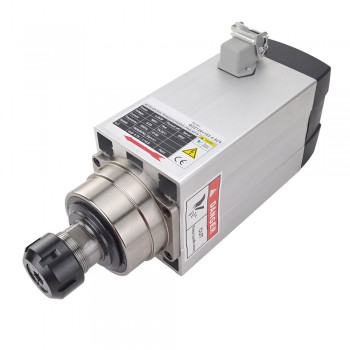
A CNC spindle motor is the high-performance electric motor at the core of a CNC machine that rotates the cutting tool with high speed and torque for precise drilling, cutting, and milling. It converts electrical energy into mechanical motion, providing the power and control needed for accurate machining of materials like wood, metal, and plastics. Key features include its high RPM capabilities (often up to 24,000 RPM), high accuracy, and different cooling methods like air or water.
2.Basic structure of CNC spindle motor
1.Motor: Provides the rotational power. It can be an AC induction or DC brushless motor and directly drives the spindle shaft in integral motor designs.
2.Spindle Shaft: The main rotating shaft that holds the cutting tool. It must be balanced and aligned precisely to prevent vibration.
3.Bearings: Support the spindle shaft, reduce friction, and maintain stability during high-speed rotation. Common types include ceramic ball bearings and hydrostatic bearings.
4.Cooling System: Manages heat generated by the motor and high-speed rotation, which can otherwise affect precision and longevity. This often involves a liquid cooling jacket or a separate fan.
5.Tool Holder: The component at the end of the spindle where the cutting tool is mounted. It must hold the tool securely to prevent vibration and ensure accuracy.
6.Clamping System: A system, often incorporating a drawbar, that applies force to securely clamp and release the tool from the holder.
3.Five types of CNC spindle motor
1.DC Spindle Motors:DC spindle motors, available in brushed or brushless configurations, are commonly used in smaller CNC machines, such as desktop routers, hobbyist setups, or compact milling systems. These motors operate on direct current and are typically controlled by simple electronic systems, making them accessible for smaller-scale operations. Brushless DC motors are preferred for their improved efficiency and reduced maintenance compared to brushed versions, which rely on carbon brushes that wear over time.
2.AC Spindle Motors:AC spindle motors are robust, high-power motors designed for industrial CNC machines. These motors operate on alternating current and are typically paired with a Variable Frequency Drive (VFD) to precisely control speed and torque. AC motors are built to handle demanding workloads and are available in various power ratings, often ranging from 1 kW to over 10 kW, making them suitable for heavy-duty applications.
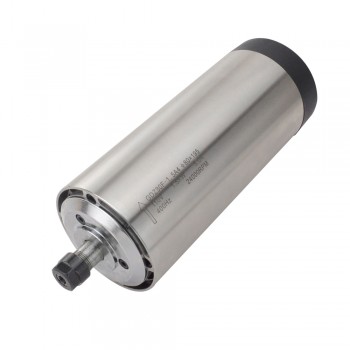
3.Air-Cooled Spindle Motors:Air-cooled spindle motors use fans or natural air circulation to dissipate heat generated during operation. These spindles are designed to be simpler and more affordable, relying on ambient air to maintain safe operating temperatures. They are commonly used in CNC machines where cost and ease of maintenance are priorities.
4.Water-Cooled Spindle Motors:Water-cooled spindle motors rely on a liquid cooling system, typically using water or a coolant mixture, to maintain optimal operating temperatures. These spindles circulate coolant through a jacket or channels around the motor, dissipating heat more effectively than air-cooled systems. They are designed for long-duration, high-performance tasks.
5.High-Speed Spindle Motors:High-speed spindle motors are engineered to operate at extremely high revolutions per minute (RPM), often exceeding 24,000 RPM and reaching up to 60,000 RPM or more. These spindles are designed for applications requiring fine, detailed work and are typically equipped with precision bearings to minimize vibration and ensure smooth operation.
4.The main reasons of spindle motor not turning
1.Power Supply Issues:This is often the first and most obvious suspect. If the spindle motor isn’t receiving power from the VFD (Variable Frequency Drive) or the main controller, it simply can’t spin. It could be due to a tripped breaker, a blown fuse, or a loose power cable.Power fluctuations or surges can also damage internal components, leading to spindle inactivity.
2.VFD Configuration Errors:The VFD acts as the brain for your spindle motor. If it’s not programmed correctly or if its settings have been changed accidentally, it may fail to send the correct signals to start the motor.This includes issues like incorrect frequency, motor ID mismatch, or locked safety interlocks.
3.Emergency Stop Engaged:You’d be surprised how often the emergency stop button is still activated, cutting off power to the motor. It’s easy to overlook, especially if multiple operators are involved.
4.Wiring or Connector Faults:Damaged, frayed, or loose wiring between the VFD, control panel, and the spindle itself can interrupt signal flow. Similarly, burned connectors or broken terminals may silently block current from reaching the motor.
5.Internal Spindle Motor Failure:If the spindle has been subjected to overheating, moisture ingress, or mechanical damage, internal components like windings or brushes (if applicable) may be damaged beyond function.
6.Software or Controller Glitch:CNC control software can sometimes freeze, miscommunicate, or fail to initialize the spindle due to bugs, corrupt files, or firmware conflicts.
7.Faulty Relay or Contactor:If the relay responsible for energizing the spindle circuit has failed, your motor won’t receive the “go” command. This often happens with age or after power surges.