1.Basic knowing about CNC spindle motor
A CNC spindle motor is a high-precision, high-performance electric motor that serves as the core power and rotation component of a CNC machine tool. It drives the cutting tool to rotate at a controllable speed, providing the necessary torque and rotational speed for material cutting, milling, drilling, grinding and other machining operations. Its rotation parameters are precisely regulated by the CNC system to match different machining processes, materials and tool requirements, ensuring the accuracy, efficiency and consistency of CNC machining.
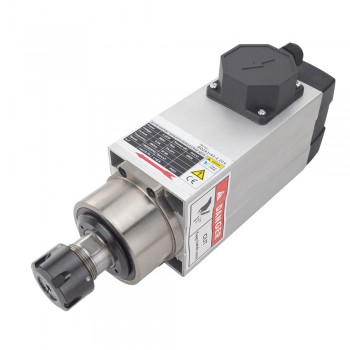
2.Main structure of CNC spindle motor
1.Stator and rotor: Like most electric motors, spindle motors have a stator and rotor. The stator is the stationary part of the motor, while the rotor rotates around the stator.
2.Bearings: Spindle motors typically use high-precision bearings to ensure smooth rotation and accuracy.
3.Enclosure: The motor is often enclosed in a protective housing to prevent damage from debris or other environmental factors.
4.Cooling system: Spindle motors generate a significant amount of heat during operation, so a cooling system is typically required to keep the motor within safe operating temperatures.
5.Drive mechanism: The motor is typically connected to the spindle via a drive mechanism, such as a belt or gear system.
3.Main advantages of CNC spindle motor
1.Shorten non-cutting time: Rapid start-stop and seamless speed switching eliminate the waiting time of speed adjustment/start-stop in traditional machining; matching with high-speed tool change of CNC machining centers, the non-cutting time of a single workpiece can be reduced by 30%~50%.
2.Improve cutting efficiency: High low-speed torque realizes heavy-duty rough cutting, and constant high-speed power ensures efficient finish machining; the processing time of a single workpiece is shortened by 20%~40%, and the daily output of the workshop is significantly improved.
3.Eliminate machining errors caused by motor factors: Ultra-low rotational runout and high speed stability avoid tool eccentricity, speed drop and other problems, ensuring the dimensional accuracy and surface finish of workpieces.
4.Stable precision for batch production: The motor has no obvious performance attenuation during long-term operation, and the machining precision of the first and the 1000th workpiece in batch production is basically consistent; the defective rate of precision parts is reduced by 60%~80%, and the product qualification rate is greatly improved.
5.Meet high-precision machining demands: Direct-drive models can realize micron-level machining precision, meeting the processing requirements of high-end industries such as aerospace, automotive core parts and precision molds.
6.Switchable control modes: Speed/torque/position three control modes can be switched freely through the CNC system, realizing multi-process continuous machining of a single workpiece without replacing the power unit.
7.Compatible with various cutting tools: Match with mainstream tool clamping systems, suitable for drill bits, milling cutters, lathe tools, engraving tools and other cutting tools of different specifications, meeting the processing demands of multi-variety small and medium batch production.
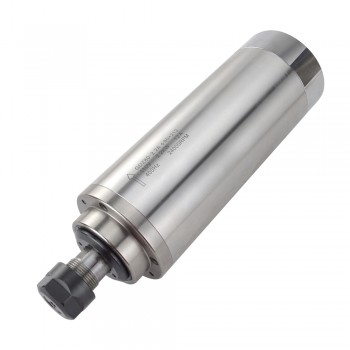
4.Common methods of reducing noise of CNC spindle motor
1.Inspect and replace bearings promptly:If you hear bearing noise, check immediately. Turn off the machine, disconnect the power, and manually rotate the spindle. Feel for friction or resistance.If the noise persists, replace the bearing with the correct specification.
2.Tighten and rebalance the cutting tools:Check that the chuck and cutting tools fit correctly. Replace any worn or deformed parts. Always clean the tool holder and tool post before installation to ensure a tight fit and prevent vibration.For frequent high-speed operation, use precision-balanced cutting tools to minimize the risk of vibration-induced noise.
3.Check for electrical abnormalities:Use a multimeter or spindle diagnostic software to check for voltage drops or frequency inconsistencies. Ensure the frequency converter (VFD) settings are perfectly matched to the spindle specifications. Eliminate any wiring or grounding issues to prevent electrical noise from escalating into a larger problem.
4.Clean the internal parts of the motor:If you suspect spindle contamination, disassemble the spindle for internal cleaning. Clean the surface with compressed air, a lint-free cloth, and a suitable degreaser. Inspect the seals and filters, and replace them if damaged. Keep the work area clean to prevent dust from entering.
5.Rebalance or replace the spindle:If a spindle bend is suspected, perform a runout test using a dial indicator. Any noticeable deviation indicates spindle misalignment or damage. Depending on the severity, the spindle may need to be rebuilt or replaced.
6.Maintain the cooling system:Inspect the fan blades for damage and remove any debris. Replace the faulty fan or upgrade to a quieter, more efficient one. For water-cooled systems, flush the coolant circuit to remove air bubbles and check the water pump’s performance. Excessive pump noise may indicate impeller failure or inlet blockage.